
Here’s an unpopular point of view for you for you all:
Back in 2002, the single biggest failing of Star Wars Episode II: Attack of the Clones wasn’t as much to do with the execution of the film. Instead, it was more down to how disconnected Lucas’ vision was from his audience’s expectations.
“Wait,” I hear you cry, “it’s biggest failing is that it’s terrible!”
Hey, I hear you. And I don’t completely disagree. The self-consciously wooden dialogue, unconvincing ‘classical’ love story and sloppy editing all combine to make it the biggest slog of the Star Wars saga. The development of Yoda’s character is either great or terrible, depending on how beholden you are to George’s view of the Jedi Order. The CG hasn’t aged all that well.
Yes, the film is flawed – but it’s not as bad as Prequel Trilogy-haters might have you believe. And here’s why…
Shadow of the Dark Side
From the first announcement of Episode II’s title the knives were out for George Lucas. The tide of critical and cultural opinion had turned firmly against the filmmaker following The Phantom Menace, and the reveal that the new film would have such a retro, B-movie name was enough to send the post-Matrix cultural world into hyperbolic meltdown.
But it wasn’t all one way traffic. Lucas had a lot more defenders back then, and against the mass of people criticising the campy, retro title were a few people pointing out that the name “The Empire Strikes Back” was hardly of its day back in 1980. Whilst the naysayers had media reach, there were still those of us out here who got it.
Further stalling the trend of negativity was the fact that the trailers were good. The early previews of the film promised fewer kids and more actual war than we saw in The Phantom Menace.
We waited with baited breath…
… and yet on release the film met with a similar critical fate as its predecessor.
Although the reception wasn’t completely against the film (Peter Rainer of New York Magazine got closest to the point by stating that the film was “a commendable example of the sort of movie we once loved and then outgrew”), overall, Episode II did not land well.
“You can’t blame actors, particularly young ones, when the words put in their mouths are almost unspeakable and the direction seems to suck them dry of energy or spontaneity”.
Joe Morgenstern, Wall Street Journal
With a middling reception and an ambivalent-at-best Hollywood media, many took the view that Lucas had lost it. After the perceived disappointment of The Phantom Menace, it seemed at the time of Attack of the Clones that the decline of Star Wars was all but complete.
* That the film still made $ at the global box office, plus more in merchandise and licensing, is something of an inconvenient truth when it comes to the negativity around Attack of the Clones. But I digress…
George Lucas Strikes Back
The reasons that Attack of the Clones fell flat are many and varied.
There are issues with execution, such as multiple shots that linger for too long and give the impression we’re watching an assembly edit. There are several unnecessary moments that disrupt the flow and dampen the action.
Of greater concern is Anakin Skywalker, who acts as a petulant creep for much of the film. Yes, this is the future Darth Vader and his character flaws are important. But, as portrayed on screen, this focus on Anakin’s failings leaves the relationship between he and Padme coming off as desperately forced.
However, this is all focusing on the negative – on where the film fails. Whilst I’d wager that removing the clumsy edits, the creepiest Anakin moments and about 80% of C-3PO would almost certainly add an extra star to most people’s ratings, you would then have a film that is less unique – and almost certainly less entertaining.
And given the enduring popularity of the film, despite these widely-acknowledged flaws, perhaps it’s more interesting to consider that these elements are a feature, rather than a bug.
Speaking of which – we then have the stylistic choices.
The oft-criticised dialogue is at times utilitarian, at other times just odd (to our contemporary ears, at least) – but it’s all in keeping with Lucas’ aim to make a timeless space opera in the serial style. And when you consider how the pieces of the entire saga fit together into one satisfying whole, some of those moments take on a whole new meaning.
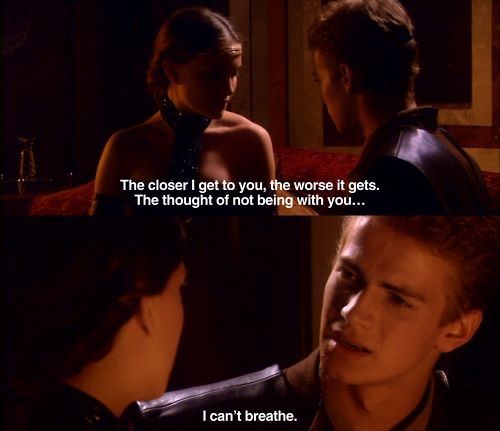
Crossing between both stylistic choice and haphazard execution, we have the performances.
In my view Hayden Christensen was unfairly criticised for his performance, as he captures the turmoil of Anakin’s plight beautifully. The fact that some people seem to forget is that he is playing a character who constantly makes the wrong choices.
However, the MVPs are Ewan McGregor, now experienced working with Lucas and more fully embodying the role of Obi-Wan; Ian McDiarmid as Chancellor Palpatine, and Christopher Lee as Count Dooku. They arguably have the most fun roles, and seeing them take to the script with such aplomb makes for some of the more enjoyable moments of the film.
Like all things worth thinking about, Attack of the Clones is a film that has come into its own in the fullness of time, away from context and expectation. In that context, Episode II has come to stand out as perhaps the most peculiar of Lucas’ already strange oeuvre – and so it also appears to be the film where he’s having the most fun.
A Product of His Time
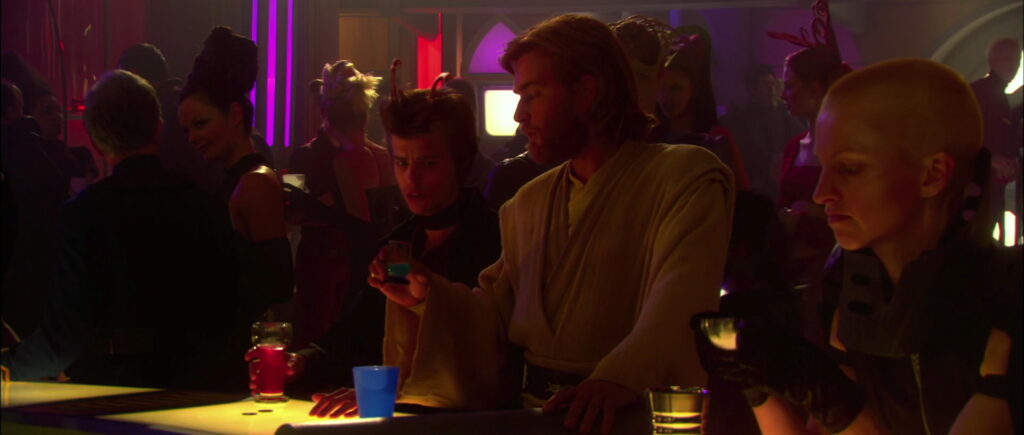
It’s well known that Lucas’ key influences for Star Wars included Flash Gordon and the pulp sci-fi serials he grew up watching, but it’s a fact that’s often regurgitated without any real understanding. The title of Episode II, and subsequent reaction to it, demonstrated that in real time.
In Attack of the Clones, Lucas giddily pursues his vision across the galaxy, taking us from the Metropolis-like cityscape and pulp noir of Coruscant’s night clubs and diners, through to the 30s sci-fi aesthetics of Kamino and Geonosis. The multiple cliffhangers play out like a classic newspaper strip, each third panel revealing another level of danger or suspense. The addition of a snooty librarian, so unnecessary from a plot point of view, brings colour and boyish exuberance to proceedings.
The film picks up pace as it goes, with the final third accelerating towards a thrilling climax. As the Battle of Geonosis opens out, all of the scene setting from the opening two-thirds of the film begins to pay off. Lucas switches to a documentary style of observation for the warfare. We get an on-the-ground view of clone troopers using huge laser cannons and the carnage caused by a collapsing Trade Federation control ship.
The lightsaber fight between Anakin and Count Dooku is more expressionist than literal; the blue and red blades twirling in the dark representing the twisting fortunes of Anakin’s own fate more so than the combat. And, on a personal note, seeing Yoda’s lightsaber duel for the first time remains a cinematic high point of my life.
Like it or not, this is Lucas at his most inspired – and that inspiration shines through in his craft.
The Phantom Menace was perhaps too traditional, too slow and laborious, and it showed that Lucas hadn’t directed a film for twenty years. Attack of the Clones takes cinematic chances that hark back to his student experimentation with the form, something that those familiar with his early work would recognise.
He was still not quite at the top of his game, and it wouldn’t be until Revenge of the Sith that all the pieces fell into place. But then that’s an article for another day.
Episode II’s flaws are still just that, and of the six films it remains the one I’m always the most conflicted about re-watching. But by the second half I’m always invested, and by the final third I’m always on the edge of my seat.
Any film that can do that – especially over 20 years after release – is not bad by any definition.
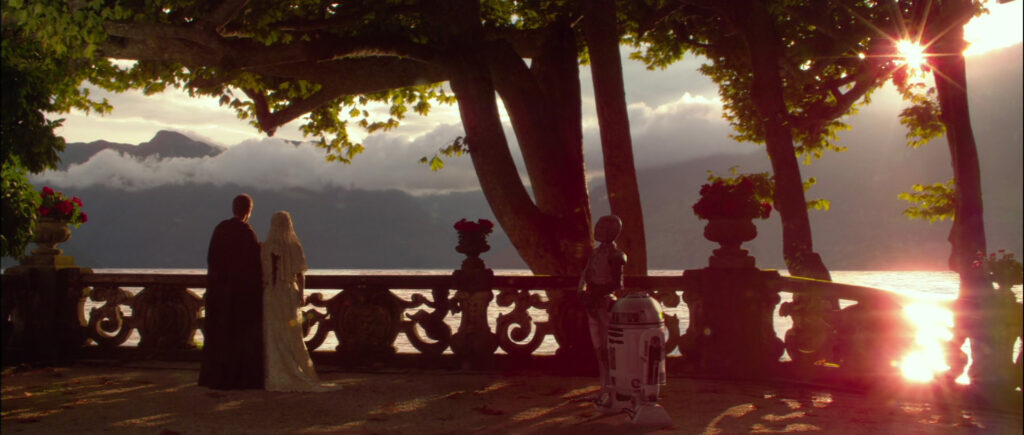
In a time where artistic risk is underfunded and often goes unrewarded, Attack of the Clones is a rare and welcome peculiarity – a blockbuster film that’s the product of a unique, singular creative vision.
Keep that in mind, and you may find a way to get into the fun of it for yourself.


